
The Wrong Enemy
The real fight over hemp beverages is not alcohol versus cannabis. It is a battle over which distribution system introduces cannabinoids to the mainstream market.
The numbers tell the story.
In Q1 2025, beverages accounted for about 1 percent of total cannabis dispensary sales by dollar volume, roughly $54.6 million for the quarter, according to BDSA. This was supposed to be the bridge product, the format that could bring social drinkers, alcohol-curious adults, and lighter-use consumers into the licensed market. The category has grown, but inside the dispensary system it is still growing from a base so small it barely registers on the shelf.
Now consider what Jon Halper, chief executive of Top Ten Liquors in Minnesota, told Reuters: hemp-derived THC beverages represent 15 percent of his business. Fifteen percent. In a liquor store.
The product did not change. The channel did.
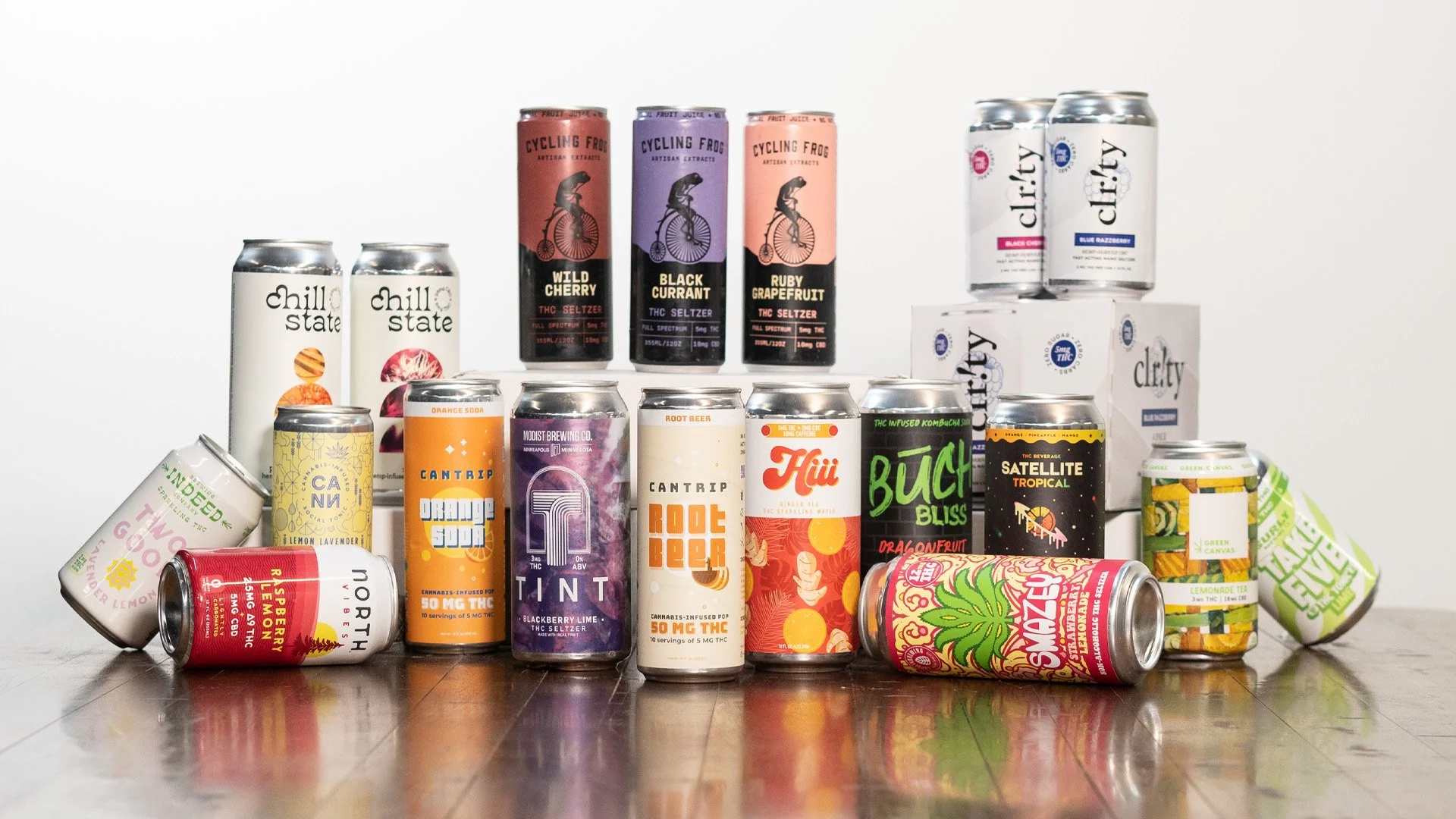
Image Credit: Ben Larson, CEO, Vertosa (https://www.vertosa.com/)
That gap is a structural signal, and the alcohol industry is already reading it. Not as a unified bloc, though. As a set of competing commercial interests that have reached genuinely different conclusions about what it means. The cannabis industry should be reading it the same way.
The producer groups landed on restriction. The Distilled Spirits Council said in its April 15, 2025 updated policies that intoxicating hemp should face the same regulations, taxation, and retail rules as marijuana, and opposed selling hemp beverages alongside alcohol at retail. The Beer Institute took a similar position in its November 12, 2024 guiding principles. The core of that argument is legitimate. Alcohol producers built their businesses inside a compliance architecture governing distribution, taxation, labeling, and retail placement. Hemp beverages entered through the definitional gap created by the 2018 Farm Bill and, in many cases, operated entirely outside that system. The asymmetry is real.
The wholesale tier went the other direction.
“Low-dose THC beverages fit the existing cold chain without modification. Same trucks. Same warehouses. Same coolers.”
The Wine & Spirits Wholesalers of America urged Congress to regulate hemp beverages through a framework modeled on the existing alcohol system rather than prohibit them. On November 5, 2025, beer, wine, and spirits wholesalers wrote to congressional leadership arguing that hemp products had created jobs, driven new investment, and helped absorb declining alcohol demand. WSWA separately pressed senators on November 10, 2025 to support the Paul amendment striking Section 781 from the Ag-FDA appropriations bill. In January 2026, Total Wine & More, BevMo!, ABC Fine Wine & Spirits, and Spec's Wine and Spirits followed by launching the Beverage Alcohol Merchants Coalition, calling on Congress to delay the ban and replace it with a three-tier regulatory framework. Their spokesman said it simply: "We know how to sell regulated products. We do it every day."
The reason is not complicated. Low-dose THC beverages fit the existing cold chain without modification. Same trucks. Same warehouses. Same coolers. For a distribution tier watching alcohol volume contract, this category does not arrive as a policy puzzle. It arrives as a margin opportunity inside infrastructure they already own. Wholesalers are not making a normalization argument. They are reading reorder velocity. When the largest independent alcohol retailer in the country forms a coalition to fight for a product's place in the market, that is the biggest buyer in the room casting a vote.
The dispensary was the right solution to the problem legalization was trying to solve. Controlled access for a product emerging from prohibition, built from scratch without any federal framework to lean on. That system works well for what it was designed to do. Beverage consumers are not using it.
I have sat in enough of these rooms to know that observation lands differently depending on which side of the table you're on. It shouldn't. The market is showing something real.
Christopher Lackner, founder and president of the Hemp Beverage Alliance, said it directly in UNLV's 2024 report A Review of the Current THC Beverage Market: low-dose products struggle in dispensaries but normalize quickly where other adult beverages are sold. The UNLV review reached the same conclusion from market data. Beverage has reached the social and occasion-based consumption context that alcohol has always owned and that the dispensary model was not built to compete for. Jessica Kruger, Nicholas Felicione, and Daniel Kruger reported in the Journal of Psychoactive Drugs that cannabis beverage users described their weekly alcohol consumption falling from 7.02 drinks before adoption to 3.35 afterward, with 58.6 percent reporting direct substitution. Brightfield Group's June 10, 2025 market update found that 46.7 percent of THC-drink consumers who also use alcohol say the products lead them to reduce their intake. Meaningful overlap exists between hemp beverage users and traditional cannabis consumers, which complicates any clean new-audience story. The channel finding holds regardless. Beverage is capturing occasions the dispensary was never designed to serve.
The cannabis industry has spent years arguing that intoxicating products belong in regulated channels with real age gates, tested products, and accountability when something goes wrong. That argument does not stop at the dispensary door. A licensed liquor store with a wholesale compliance trail is a regulated channel. A gas station counter with a hemp gummy display is not. The fight worth having is between those two things, and the licensed cannabis industry should be making it loudly.
Accepting that argument requires accepting something uncomfortable. The case for the dispensary as the exclusive channel for all THC products rested on two assumptions: that regulatory legitimacy required specialized retail, and that consumer demand would follow the channel rather than reveal one. Hemp beverages have tested both in live market conditions and returned results that are genuinely complicated. The regulatory legitimacy argument weakens when the wholesale tier of a fully regulated industry is lobbying for a path into the same channel. The consumer demand argument weakens when the product that underperforms in dispensaries is driving 15 percent of revenue inside liquor retail.
“Consumers who found these drinks in a liquor store and liked them do not unlearn that. The habit outlasts the legislation.”
Cannabis operators who built compliant businesses under Section 280E, without banking access, inside state licensing structures that imposed costs no other legal industry absorbed, have legitimate grievances about a market dynamic that routes around those burdens. Serious grievances. Any federal framework that ignores them will not hold. The licensed industry's compliance record is an argument for being at the center of whatever comes next. Compliance is not a reason to limit what that looks like.
The federal situation is genuinely unstable. Congress enacted a one-year runway to a 0.4 milligram total THC-per-container limit that takes effect in November. At that threshold, a single serving exceeds the allowable total. Most commercially viable hemp beverages do not survive it as currently formulated. That limit may be modified, delayed, or litigated. Even if it takes effect as written, it levels the compliance burden without answering the channel question. Consumers who found these drinks in a liquor store and liked them do not unlearn that. The habit outlasts the legislation.
None of the positions currently on the table constitutes a governance framework. The major alcohol producer groups want hemp regulated out of their channel. Wholesalers want it regulated in. Cannabis operators want parity. Congress has drawn a line that may not hold. Each reflects a commercial or political interest, and none of them adds up to a system.
The people who actually move product have already decided this category belongs in the market. They are building around it. The cannabis industry has more in common with those people than with anyone currently trying to litigate hemp out of existence, and it would do well to start acting like it.
Show up.