Schedule III, Mostly
The mountain roared, and out came a mouse. Fifty-five years after the federal government placed cannabis on Schedule I, the Justice Department moved on Wednesday to reschedule state-licensed medical marijuana to Schedule III, ended Section 280E for medical operators, and routed the broader question of adult-use rescheduling to a public hearing on June 29th.
It was the most consequential federal cannabis action in five decades. Whitney Economics put 2025’s 280E drain on the industry at $2.24 billion and the cumulative excess since 2018 at roughly $15 billion. As of April last week, that money stops leaving the businesses that paid it. Patients gained federal recognition of their medicine. Researchers gained access to the products on dispensary shelves rather than to the federally-approved supply that for over five decades came from a single contract grower at the University of Mississippi and bore little resemblance to anything a patient would recognize. That is progress.
And yet.
Read Wednesday’s order from anywhere outside the United States and what arrives is a country knocking, late, on the door of a room it has been refusing to enter for a generation.
“Cannabis has been part of the human supply chain for far longer than American policy has been arguing about it.”
Cannabis has been part of the human supply chain for far longer than American policy has been arguing about it. In Jamaica, ganja arrived with indentured servants from India in the nineteenth century and gained traction as a medicinal herb generations before Bob Marley made it a cultural export. The Rastafari faith, rooted in 1930s Jamaica, treats the plant as sacrament. Over the last decade Jamaica, Antigua and Barbuda, Saint Vincent and the Grenadines, Saint Kitts and Nevis, and the U.S. Virgin Islands have built legal frameworks specifically to recognize that religious use rather than persecute it. Antigua’s prime minister apologized to Rastafari elders in 2023 for decades of state harassment, granted sacramental cultivation licenses, and described the plant as a Pan-African religious inheritance the Caribbean had failed to protect. That didn’t happen just this week. Most of it has been in place for years.
In Israel, Raphael Mechoulam and Yechiel Gaoni isolated THC at the Weizmann Institute of Science in 1964, six years before the United States passed the law that would make studying the plant nearly impossible domestically for the next half century. Israel began licensing medical cannabis in the early 1990s and now imports more than 24 tonnes a year (roughly 26 U.S. tons), primarily from Canada, on top of one of the most research-intensive cannabis programs in the world. While American researchers waited, even begged, for DEA to approve a second federally-registered grower, Israeli universities published on cannabinoid pharmacology, autism spectrum disorders, PTSD in IDF veterans, and inflammatory bowel disease, with state research budgets attached.
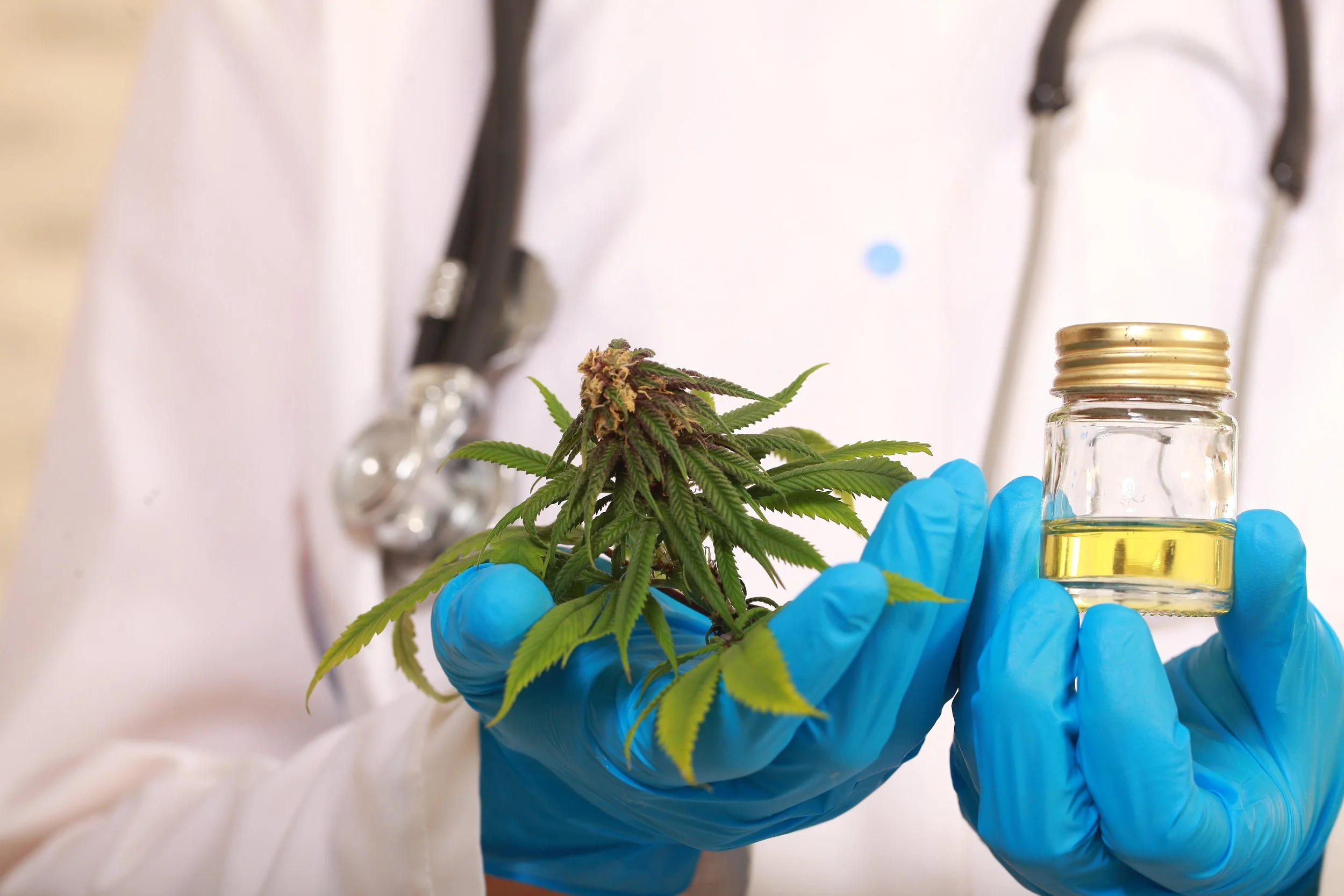
In Canada and Uruguay, the regulatory question Washington just opened on Wednesday was answered years ago. Uruguay legalized cannabis at the federal level in 2013 and has run a fully functional regulated adult-use market for over a decade. Canada legalized adult-use federally in 2018, has cannabis stores in every province, and exported roughly 240 tonnes (about 264 U.S. tons) in 2025, with Germany now absorbing 62 percent of Canadian flower exports. Aurora Cannabis moved roughly $48 million CAD in international medical revenue in a single quarter ending December 2025. Tilray reported $20.2 million USD in international cannabis revenue in three months. These exporters hold EU-GMP certification and established distribution into markets the United States is only now legally permitted to enter.
In Germany, the medical patient count went from approximately 250,000 in April 2024 to roughly 900,000 by mid-2025. Medical imports rose from about 73 tonnes (80 tons) in 2024 to 201 tonnes (221 tons) in 2025, more than tripling year over year. Germany ran this on top of a federal medical program that has operated since 2017 and a partial adult-use legalization that took effect in April 2024, with home cultivation, non-profit social clubs, and a federal regulator coordinating across sixteen Lander. The country is currently raising its annual import quota in real time because demand keeps outrunning supply.
In light of King Charles visiting Washington D.C. this week, let’s take a look at the United Kingdom’s approach. The UK legalized medical cannabis in 2018, but the National Health Service has issued fewer than five cannabis prescriptions in seven years. The actual market is private. Roughly 80,000 UK patients now receive medical cannabis through a network of private clinics that grew prescriptions 262 percent between 2022 and 2024. The country imports its supply, patients pay out of pocket, and ten doctors prescribed more than half of all cannabis medicines issued since 2018. Last summer the Home Office commissioned the Advisory Council on the Misuse of Drugs to conduct the first comprehensive review of the UK framework since legalization. The British are quietly running Europe’s second-largest medical cannabis patient market on top of a public health system that does not participate in it. That is a serious experiment in private-pay parallel systems, and American policy has barely studied it.
Medical cannabis was legalized in Poland in 2017. By 2025, the country had built a market of roughly 105,000 patients and dispensed about 5,450 kilograms (roughly 12,000 pounds) under an annual import limit of 20 tonnes (about 22 tons). There is no public reimbursement. Patients pay out of pocket, and per-gram prices fell 28 percent in a single year as supply matured. Domestic cultivation has been legally permitted since May 2022 but has not commercially launched. Every gram the program serves comes from imports, mostly from Portugal (much of it Canadian product finished in Portuguese facilities) and from Canada directly. In 2024, Poland tightened telemedicine prescribing rules and the prescription rate dropped sharply before recovering as in-person clinics opened. Poland built a functioning market without domestic supply and without state insurance, and learned in real time how fragile a fully import-dependent program becomes when prescribing infrastructure shifts.
The Netherlands, the country most American readers assume invented liberal cannabis policy, has been running a paradox. For over fifty years, Dutch coffee shops sold cannabis legally at the front door while cultivation and supply remained illegal at the back. On April 2025, exactly thirteen months ago, ten Dutch municipalities entered the first phase of a controlled supply chain experiment that finally permits licensed domestic cultivators to grow product for retail sale. Even now, the experiment is running short on quality hashish, and hashish enforcement has been delayed twice because regulated growers cannot match the quality of illegal Moroccan supply that consumers have been buying for half a century. Amsterdam, one of the most famous cannabis markets in the world only this year began the work of making its supply chain legal.
Patients continue to weigh their legal options, with lawyers on call, before traveling outside the systems built to serve them. A patient treating chronic pain in one country is a felon in another. Simple travel, whether for work or vacation, requires a law degree or foregoing medication. Until we solve that, we all have work to do.
Read across these jurisdictions and a different picture comes into focus. Cannabis, internationally, has been part of an adult-use supply chain in Uruguay since 2013 and Canada since 2018. It has been part of a medical supply chain in Israel since the 1990s, Germany since 2017, the UK since 2018, and Poland since 2017. It has been part of a religious supply chain in the Caribbean for nearly a century. It has been part of wellness and herbal-medicine traditions in India, the Middle East, and parts of Latin America for far longer than that. Each of these countries has its own history with this plant. Some of those histories are scientific. Some are spiritual. Some are commercial. Almost all of them include hard chapters worth reckoning with.
The United States has a history too. Ours is the one we still have not finished looking at.
Federal prohibition was enforced in a country where cannabis use rates ran roughly even across racial lines but arrest rates did not. Black Americans were arrested for marijuana possession at nearly four times the rate of white Americans, in some jurisdictions at eight times. Those arrests reshaped families. They reshaped neighborhoods. They followed people into job applications, custody battles, public housing eligibility, and immigration proceedings for years after the underlying conduct was forgotten. None of that disappears because the Justice Department moved a category to Schedule III on Wednesday. The medical efficacy and therapeutic value that millions of patients now access legally is real, and the records, the convictions, and the communities still carrying the weight of how we got here are also real. Both true at once. Wednesday's order does not require us to choose between them. It does require us to stop pretending we do not have to deal with the second one.
“Plants were not waiting on the United States to issue a final order before they could be cultivated, studied, and shared.”
Plants were not waiting on the United States to issue a final order before they could be cultivated, studied, and shared. The conversation has been going on. We have been refusing to be part of it, and we have spent decades building a domestic enforcement record we now have to face. On Wednesday, we asked to be admitted to the international conversation. Whether we belong in it depends on what we do next, both abroad and at home.
Which raises the question of what kind of participant we are about to be.
The order amends 21 CFR 1312.30 to add state-licensed medical marijuana to the list of nonnarcotic Schedule III through V controlled substances subject to import and export permit requirements. State medical operators with the right DEA registration will be eligible to apply for federal import and export permits. That removes one wall. The FDA barrier is the next one. Any cannabis product marketed for therapeutic claims is, under the Federal Food, Drug, and Cosmetic Act, an unapproved new drug, and FDA retains independent authority over the import and export of such products. This week’s order addresses the controlled-substances framework. It does not address or upend the drug approval framework, and it could not have under the treaty authority DOJ invoked. International product cannot lawfully move into the United States, and U.S. product cannot lawfully move out, until that second framework is addressed and importantly, satisfied. The American medical cannabis industry has been a domestic-only category by federal compulsion. That compulsion has loosened at the CSA level for the medical lane. The compulsion at the FDCA level remains.
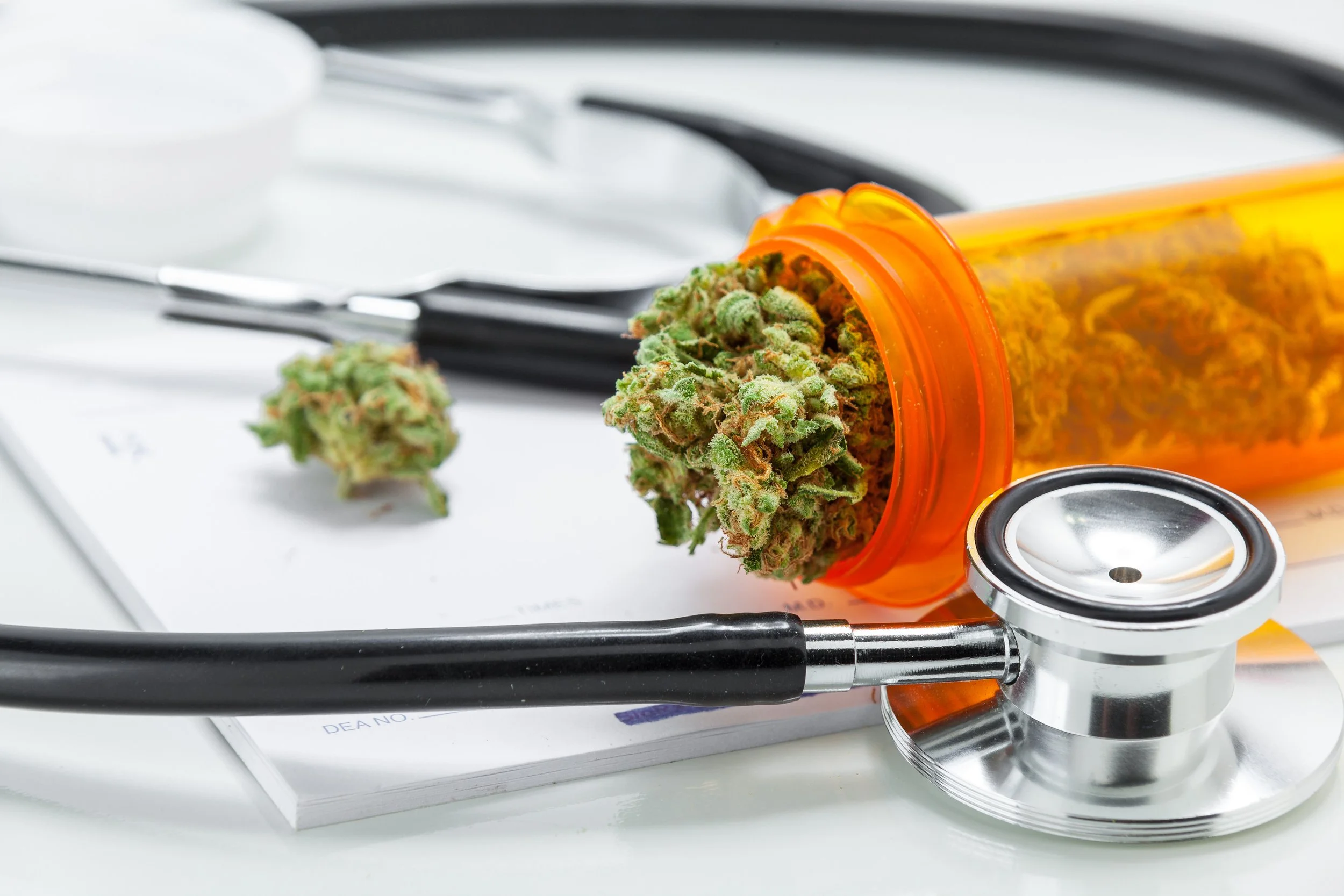
Humility ought to enter the room here. American operators arrive in this market five to ten years behind everyone else, with a domestic regulatory architecture still being written, against competitors that already hold EU-GMP certification and established export relationships across Europe, Australia, and the Caribbean. American medical cannabis does not yet have the standardized testing, manufacturing, and chain-of-custody infrastructure that European medical regulators expect, and it does not yet have an FDA pathway that would let any of that infrastructure interoperate with the rest of the U.S. pharmaceutical system. Canadian product, already certified and already at scale, can outcompete domestic supply at price points American operators cannot match while paying state taxes. The Israeli Commissioner on Trade Levies imposed anti-dumping tariffs on Pure Sunfarms because the company's export prices to Israel ran low enough to threaten domestic Israeli producers. That is the maturity of the market we are joining.
Preparing for that reality is governance work, not marketing. It looks like Good Manufacturing Practice as a precondition rather than an aspiration. It looks like ISO-accredited testing labs whose standards align with EU and Health Canada protocols rather than with whatever each state license category happened to require in 2018. It looks like federal coordination on chain-of-custody and product identification across state lines, because a Schedule III medical product moving through interstate commerce cannot be governed by the loose interoperability we have lived with under prohibition. It looks like learning from Poland what happens when a market becomes fully import-dependent, and learning from the UK what a parallel private system delivers and what it leaves out. It looks like building serious responsibility into a category that is about to get bigger, faster, and more globally connected than the regulators currently in their seats were ever resourced to handle.
Regulators do not get to do this work alone. Industry has to do its share. Responsible operators self-impose quality standards before regulators require them, market products on the evidence, structure equity partnerships that actually transfer capital and ownership, pay the people who do the work like the work matters, and refuse to fund the junk science that has made every cannabinoid policy conversation harder. The Schedule III moment is an invitation to operate as if medical legitimacy is the asset. Operators who treat the regulatory floor as a ceiling will be outcompeted by Canadian, German, and Israeli operators who started building from the floor years ago.
None of that is glamorous. None of that gets a press release. All of it determines whether American patients get safe, consistent product, whether American operators can hold their own when Canadian and German and Israeli supply starts arriving in volume, and whether the country that wrote the prohibition framework can credibly contribute to the global one that replaces it.
“This plant has been part of human medicine, religion, wellness, and adult-use supply chains for generations.”
This plant has been part of human medicine, religion, wellness, and adult-use supply chains for generations. The rest of the world has been studying it longer, often better-resourced, less encumbered by the political theater that has defined the American debate. This week was the United States asking for a seat at a table the world has been sitting at without us. June 29th will be the next test of whether we are willing to actually listen to the people already at it, or whether we will do what we have done for fifty years and assume our framework is the one everyone else should adopt.
The milestone of rescheduling is real. So is the perspective. Wednesday was the most important federal cannabis day in fifty years for the United States. To the rest of the world, though? It was another Wednesday in April. The work that determines whether we belong in the room they have built is the boring, technical, expensive work of quality, standards, and responsibility. None of that is resolved by the order. All of it is on us to deliver.