A Coalition Without A Caucus
What the next twenty-one months decide for an issue both parties want to defer.
Here is what cannabis reform actually looks like in 2026, away from the rescheduling press releases and the appropriations vote counts.
It is a 78-year-old in Pennsylvania who started using a low-dose tincture for her arthritis after her doctor told her she should probably stop refilling the oxycodone. It is a Marine veteran in Texas, two tours in Iraq, who finally slept through the night for the first time in twelve years. It is a pediatric epilepsy patient in Indiana whose parents drive across the state line to access medicine their state will not let them possess at home. It is a millennial in Brooklyn who would rather have an edible at the end of a long week than a third glass of wine, because she has watched what alcohol did to her father's liver and she has done the math on her own. It is a rural Republican in Oklahoma who voted in favor of medical marijuana in 2018 because his cousin came home from the VA with a death sentence on the installment plan, and cannabis kept him alive long enough to walk his daughter down the aisle.
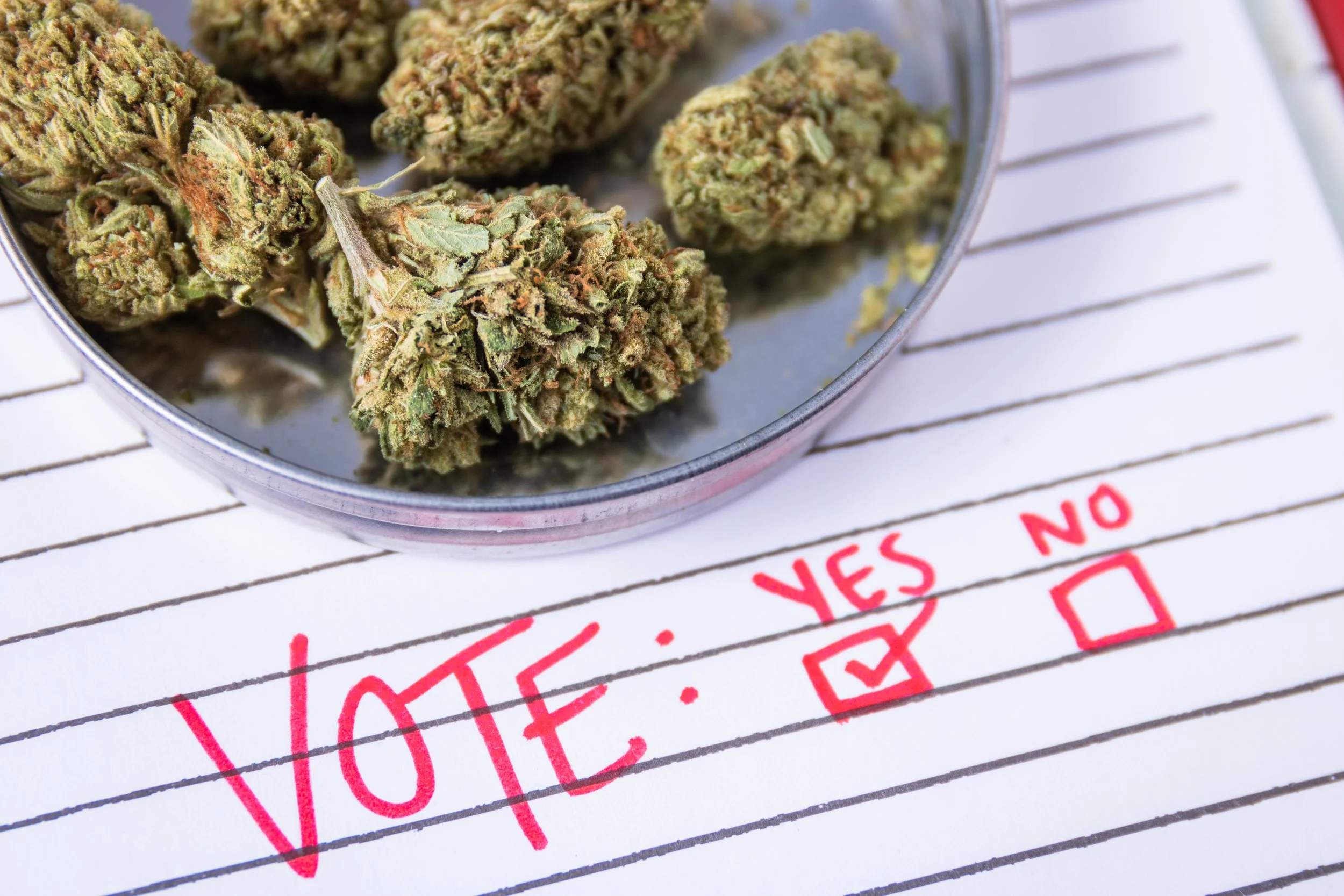
Different people, different reasons, same answer. They want to be left alone to use a plant that the country has, at this point, mostly decided it is fine with, and they want the government to provide the basic protections we expect when we buy anything else: that the product is what the label says it is, that it has been tested for contaminants, that the people selling it are not also running a fentanyl operation in the back room. The cross-partisan public coalition in this country wants their doctor, their dispensary, or their state-licensed retailer to operate under the same kind of basic regulatory framework we apply to alcohol, tobacco, gambling, and the long list of other vices the American republic has decided adults can navigate on their own. Adults using a plant. Patients accessing medicine. Operators running businesses that pay taxes and sell tested products. The ask is small.
I came to cannabis the way most people in regulatory work come to anything. It was an assignment. I had been a health care policy aide early in my career, and one day cannabis was the file on my desk. A ballot question sought to legalize it and I drew the short straw to research how. It then became the agency I built. What followed was an education. In the history of how our country actually came to prohibit a plant. In the patients who had been waiting decades for a clean conversation about access to medicine. In the enforcement record and what it really cost the people it had been enforced against. In the operators who were trying to build legitimate businesses on top of a federal framework that pretended they did not exist, except when taxes were due. By the time I had been at it long enough to be dangerous in conversation, I had also figured out that there was no single political path to this issue. There were many.
That is roughly where most of the country has landed on this. They are not single-issue voters. Nobody is changing parties over cannabis. But ask any decent pollster and they will tell you the country, broadly, has decided this. No age group opposes legalization. Gallup's 2025 polling put support at 57 percent among Americans 55 and older, and at 72 percent among the youngest adults. Pew put medical cannabis support at 88 percent. The argument is over. The country had it. The country won.
The political class is still having a different argument.
This week, the same Republican Party that produced the rescheduling order spent the following days trying to defund it. The House Appropriations Subcommittee on Commerce, Justice, Science approved language on a party-line 8-6 vote which would bar federal officials from using any funds to reschedule marijuana, with the full committee taking it up on May 13th. Last December, twenty-two Senate Republicans signed a letter from Sen. Ted Budd (R-NC) urging the incoming Trump administration not to reschedule at all. The reform Republicans, including Sen. Rand Paul (R-KY), Rep. Nancy Mace (R-SC), and Rep. Dave Joyce (R-OH), do not hold the committee gavels. The prohibition Republicans, including Rep. Hal Rogers (R-KY) and Rep. Andy Harris (R-MD), do. The party is divided on cannabis reform, and the division is sitting at the chokepoints where division becomes veto.
The Democratic fracture is older and runs in the other direction, which is the part that does not get written about because writing about it makes Democrats angry. In January 2024, eleven Democratic senators and Bernie Sanders (I-VT) sent a letter to Attorney General Garland and DEA Administrator Milgram arguing that the administration "should deschedule marijuana altogether," that Schedule III did not go far enough, and that the case for descheduling was overwhelming. Sens. Schumer, Booker, Warren, Wyden, Fetterman, and most of the progressive bloc. The committee chairs and the swing-state Democrats stayed off the letter. The Cannabis Administration and Opportunity Act, the maximalist legalization bill that Sens. Schumer, Booker, and Wyden have reintroduced through multiple Congresses, has never approached sixty Senate votes. The Democratic Party agrees that cannabis reform should happen. The disagreement is over what reform is. Social equity, which is a progressive priority, offends law enforcement and most of the moderate Democrats who care about cops endorsing them in their next race. Big marijuana, which is the kind of business that could actually run a supply chain at the scale the country needs, offends the progressives who want small businesses and equity license-holders to carry the market. Both wings are right about something the other wing is missing, which is why neither wing has been able to deliver.
“Both parties have left the country waiting because they cannot finish their internal arguments long enough to take yes for an answer. ”
Both parties have left the country waiting because they cannot finish their internal arguments long enough to take yes for an answer. President Joe Biden promised cannabis reform in 2020 and produced an unfinished rescheduling process in 2024. President Donald Trump signaled support for state medical autonomy in 2018, presided over Jeff Sessions rescinding the Cole Memo, signaled support again in 2024, signed an executive order, and then watched his own caucus's appropriators vote to gut what his Acting AG had just executed. Two presidents from two parties, both of whom told the country they wanted to do this, neither of whom has finished the job.
“The country has done its part. It has done it through every institutional channel available, often the only one available, and it is still doing it. The waiting is on Washington.”
While Washington has been failing to deliver, the country has gone ahead and built the regulatory infrastructure itself. Mostly through ballot initiatives in states where the legislature would not move. Arkansas, Oklahoma, Utah, South Dakota, Mississippi, Nebraska. Voters in some of the most conservative electorates in the country wrote medical access into law because their elected officials would not. Adult-use legalization followed the same pattern in Colorado, Washington, Oregon, California, and Massachusetts. Ballot initiatives are blunt instruments. They produce laws that legislatures then have to clean up. The legislatures that did clean them up usually got around to it eventually, once the political cost of leaving a voter-approved program in regulatory limbo got higher than the cost of touching the issue. The states without ballot access are the slowest, because they have no forcing mechanism. The country has done its part. It has done it through every institutional channel available, often the only one available, and it is still doing it. The waiting is on Washington.
A politician who said the obvious thing about cannabis would not lose votes for saying it. They might pick up several. The reason it does not happen is that saying the obvious thing means crossing the people who actually fund and run American campaigns. The alcohol industry, which has watched cannabis erode beer and wine sales in legal-market states. The pharmaceutical industry, which has spent fifty years navigating the FDA approval pathway and views natural medicine as a threat to the channel it has built. The insurers, the law-enforcement associations, the prison-industry lobby, and a generation of party leaders whose worldview on drugs was formed during the Reagan administration and never updated. Hal Rogers, who chairs the appropriations subcommittee that voted to defund rescheduling this week, was first elected to Congress in 1980. The same year Ronald Reagan was. He is 88 years old. The senators and representatives who chair the relevant committees on cannabis came up in American politics during the same decade Nancy Reagan was telling kids to say no to drugs. Some of them shook her hand at the time. They are not the audience for an argument about why the country has moved on.
Out here in the country, it does not look low-priority to the 78-year-old in Pennsylvania, the Marine in Texas, the parents in Indiana, the woman in Brooklyn, or the rural Republican in Oklahoma. It looks like the government still fighting about something the country decided ten years ago, while their state-licensed dispensary works around a federal framework built to deny them the thing they have already been told they can have.
Federal cannabis enforcement fell unequally for fifty years. The people who paid for that prohibition were disproportionately Black and Brown, and reform is not a clean accounting until that record gets reckoned with. That is what the descheduling caucus in the Senate Democratic letter is arguing, and they are right. They are also operating in a country whose patience for that conversation is uneven, and whose grandmothers and veterans and pediatric patients are waiting on a separate clock. The reckoning and the access live on the same page. Treating them as competing priorities is how the issue ends up unfinished.
Cross-cutting issues do eventually resolve, usually because someone decides the political cost of inaction has gotten higher than the cost of finishing the internal argument. The Democratic Party split over Prohibition for years before FDR's 1932 platform embraced repeal, accepted the cost of losing the dry wing, and pushed the 21st Amendment through state conventions to bypass the legislatures that would have blocked it. Local control was preserved, many counties stayed dry for decades, and the federal retreat was the win. The cannabis coalition is still waiting for someone to do the same math.
The calendar is shorter than the political class is acting like it is. Twenty-four days from today, Texas Senate Republicans hold a primary runoff between John Cornyn and Ken Paxton. Cannabis is not the lead issue, but it is one of the few where the Fabrizio Lee polling memo gives Cornyn permission to move toward voters Paxton cannot reach. Six months from today, thirty-six governors are on the ballot. The cross-partisan coalition will, again, do at the state level what Washington has not. Twenty-one months from today, the Iowa caucuses begin the 2028 nominating cycle. By then, somebody has to decide whether to claim this issue or keep deferring it for a third presidential cycle in a row.
The most likely outcome is…nothing. The appropriations language gets stripped in conference, as similar language has before. The hemp cliff hits in November and gets partially softened. DEA registration sorts the medical industry into a federally recognized lane and a state-only lane. State markets keep doing the work. The 2028 primaries arrive without a champion. The country waits another cycle. None of this is dramatic. All of it is what we have been doing for a decade.
“The country supports reform, has supported reform, and will keep supporting reform whether either party notices or not. ”
There are other ways this could go, though. A 2028 candidate could decide the cross-partisan coalition is worth claiming and accept the cost of saying so. The libertarian wing of the Republican Party could decide cannabis is the test case for whether the party means what it says about small government. The descheduling Democrats and the rescheduling Democrats could find each other in time to put something on the floor. None of these is the base case. Any of them changes the country.
Here is what I keep coming back to. Cannabis is not an orphan. The country has not abandoned it. The country supports reform, has supported reform, and will keep supporting reform whether either party notices or not. The coalition is enormous. What is missing is a caucus to claim it, because the political class is still fighting about something the country stopped fighting about a decade ago. Our electeds are the ones that need to catch up.