Certificate of Analysis
Everyone Agrees Testing Matters. Nobody Agrees What That Means.
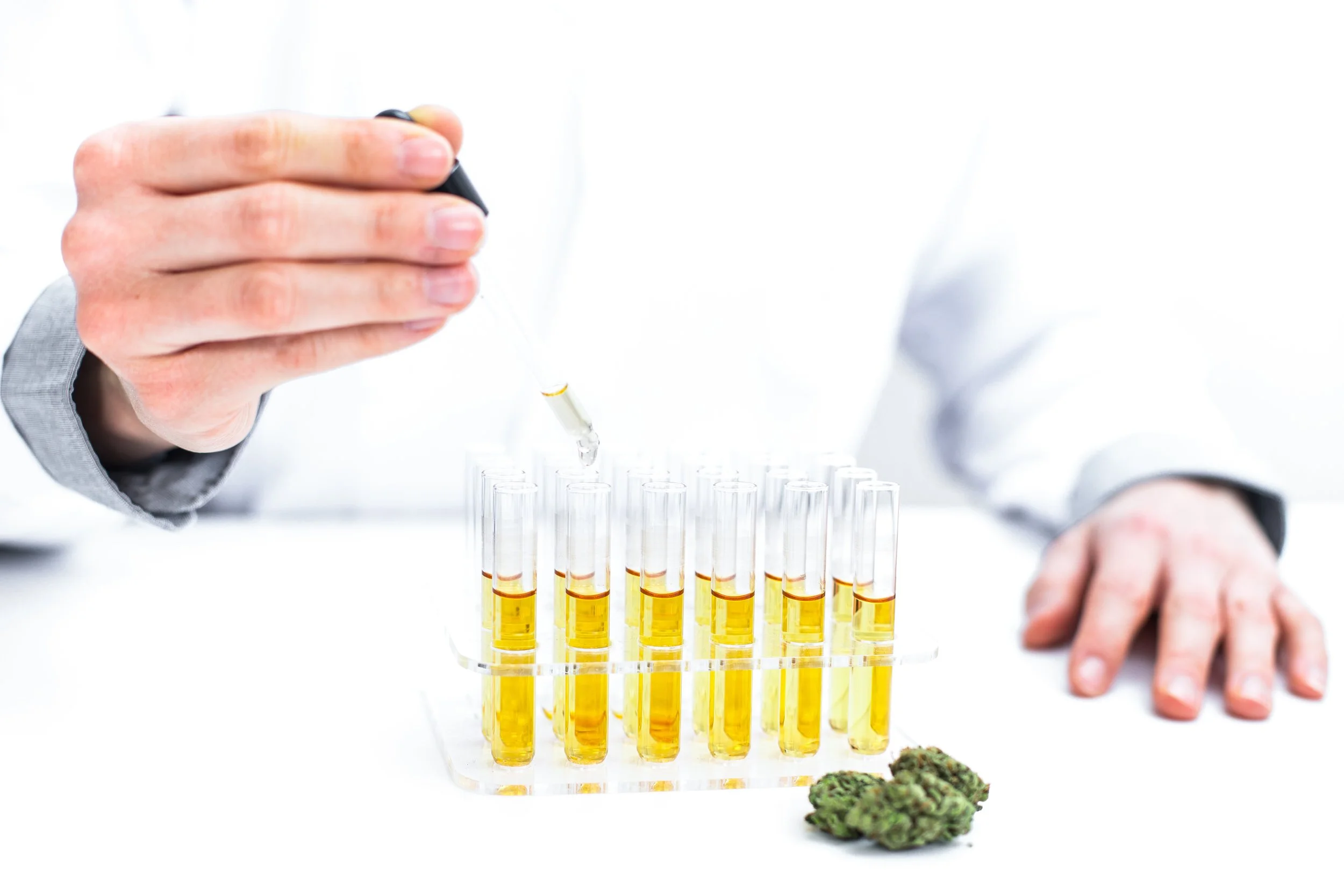
Everyone agrees that testing matters. Legislators say it during floor debates. Regulators write it into their frameworks. Operators accept the cost because the alternative is a market nobody trusts. Voters hear it and feel reassured. That consensus has held from the earliest days of legalization through every state that followed. It is also, on its own, not nearly enough.
The testing system that has emerged in the aftermath, though, is vulnerable. So, too, are the consumers and patients that rely on it.
This is not a new accusation. The topic of lab shopping and testing standards has confounded regulators and operators for years. While there is often a desire to address it, or an intention, we haven’t seen much follow-through or solutions.
I wrote about lab shopping for THC Group last February, walking through the mechanics of how operators game a system that lets them choose their own testing lab. In December, I published a commentary in Clinical Therapeutics that carried the argument into clinical territory, because the patients absorbing the consequences of a compromised testing system deserve a diagnosis that takes their clinical reality seriously. What I have come to understand more clearly since writing those pieces, and what the enforcement record has made harder to avoid, is that the testing problem is actually two problems.
The first is well known, and well documented: lab shopping, where cultivators and manufacturers seek the lab most likely to return favorable numbers. The second one is sampling, and it can implicate even the most honest of labs and the most stringent of standards. If operators are allowed to select their own samples, with minimal or no oversight, it doesn’t matter how good the lab is, how careful the analyst is, or how expensive the instrument. The result risks being misleading. The sample risks not being truly representative, even when every actor in the chain is honest.
Those two failures operate independently. A state can eliminate lab shopping entirely and still have a testing system that misleads patients and consumers, because the material that enters the lab was chosen by the party with the most to gain from a favorable outcome. That reframing matters, because the debate has centered almost entirely on bad labs and actors. The deeper vulnerability is a sampling architecture that fails even when the labs are good.
“Regulators have chased bad actors for years, including the labs that are supposed to serve as the industry’s referees.”
None of this is a new phenomenon. Regulators have chased bad actors for years, including the labs that are supposed to serve as the industry’s referees. It is important to acknowledge, though, that in our legalization scheme, labs are often for-profit entities and market participants. They have customers, investors, and bottom lines to answer to. It is through that enforcement that we often learn more details about the system we’ve built underneath the headlines.
Michigan is where the scale of the problem first became impossible to ignore. Viridis Laboratories had tested roughly 60 percent of all cannabis sold in the state, an extraordinary market concentration for a compliance function, and it meant that when the problems surfaced, they touched nearly everything. An administrative law judge found the lab had used unapproved testing methods, inflated THC readings, and misrepresented contamination results. One particular finding especially jumps out: technicians approved visibly mold-contaminated samples by classifying the visible mold as mite feces. The recall covered more than 400 retail locations. The estimated value was $229 million. The lab's three founders, all former Michigan State Police forensic officers, were permanently banned from the industry in August of last year.
“The system relied upon them to call balls and strikes, and they were tipping pitches the whole time. ”
Let all of that sink in - former state police crime lab personnel transitioned to legal cannabis and gamed the system to the tune of $229 million in product hitting the supply chain to be consumed, combusted, or ingested by patients and consumers. They all had licenses to operate. The system relied upon them to call balls and strikes, and they were tipping pitches the whole time.
Massachusetts offers a different lesson. Assured Testing Laboratories handled roughly a quarter of the state's cannabis testing between April 2024 and April 2025. During that window, the lab reported that only 10 out of 17,565 samples failed for yeast and mold, a 0.05 percent failure rate against a statewide average of approximately 4.5 percent. But that statewide average deserves scrutiny of its own. Assured's implausibly low numbers were part of the data producing that average, pulling it down. And Assured is only the lab we know about. If other labs were similarly underreporting, and the enforcement record in other states suggests that is not an unreasonable assumption, then the labs testing in good faith were likely failing product at rates well above what the published average reflects. The real gap between Assured and honest testing may have been considerably wider than ninety times. The Cannabis Control Commission found evidence that the lab retested 160 samples until a non-detect result could be produced. The July 2025 suspension was a significant enforcement action, but, curiously, no product recall accompanied it. Thousands of products tested during that window had already reached patients and consumers. The COAs looked normal. The products may not have been.
📌 Massachusetts Cannabis Data, an independent dashboard built entirely from the Cannabis Control Commission's own open data catalog, now makes these patterns visible to anyone willing to look.
California lost four testing labs in nine months. Consider California Cannabis Testing Labs, whose director signed a certificate of analysis clearing a vape product for retail sale. When the state retested that product through its reference lab infrastructure, it found chlorfenapyr, a banned pesticide, at 600 times the permissible level. The certificate said no detection. A second lab, Verity Analytics, inflated THC potency by as much as 32 percent and, in at least one documented case, cleared pesticide samples without running the required test.
Oregon tells a different story. In September 2024, regulators cited seven of the state's eleven accredited testing labs simultaneously. All seven for negligent sampling. Three additionally for intentional adulteration: lab employees adding kief directly to the samples being tested. Lab employees…not the cultivator. I wrote in February 2025 that sample spiking is not lab shopping. It is fraud, committed against the lab, against the consumer, and against the public. Here, though, it was the lab doing the spiking!
The pattern extends further. Oklahoma shut down Greenleaf Labs in August 2025 over yeast and mold errors affecting roughly 19,000 samples; as of this month, contaminated products were still on dispensary shelves. New York recalled 55 product lots in February after a lab falsely reported passing results for Aspergillus and misreported cadmium. None of these cases involved the same lab or the same state. What they share is the design that made the misconduct possible.
I want to be careful here, because the temptation in a piece like this is to flatten a complicated problem into a simple indictment.
Not every discrepancy in testing results reflects fraud or bad faith. Cannabis is a living plant with real biological variability. Cannabinoid and terpene concentrations differ meaningfully within a single plant depending on where the sample is drawn. Research has documented an average variance of 20 percent in potency levels from different samples of the same test lot. Different analytical methods produce legitimately different results from the same material. The ongoing scientific debate between culture-based screening and quantitative PCR for microbial analysis is a genuine disagreement with real clinical implications, not a convenient cover for manipulation.
That distinction matters practically. Many states adopted culture-based total yeast and mold count as their primary microbial screen, borrowing from food safety models that were never designed for a product patients inhale. Products that pass those screens can still carry clinically significant Aspergillus detectable only by molecular methods. A physician counseling a transplant patient needs to know whether the product is safe to inhale. A colony count does not answer that question.
Those are legitimate scientific complexities, and they account for some variation in results across labs and jurisdictions. They do not explain, though, what the peer-reviewed literature has found.
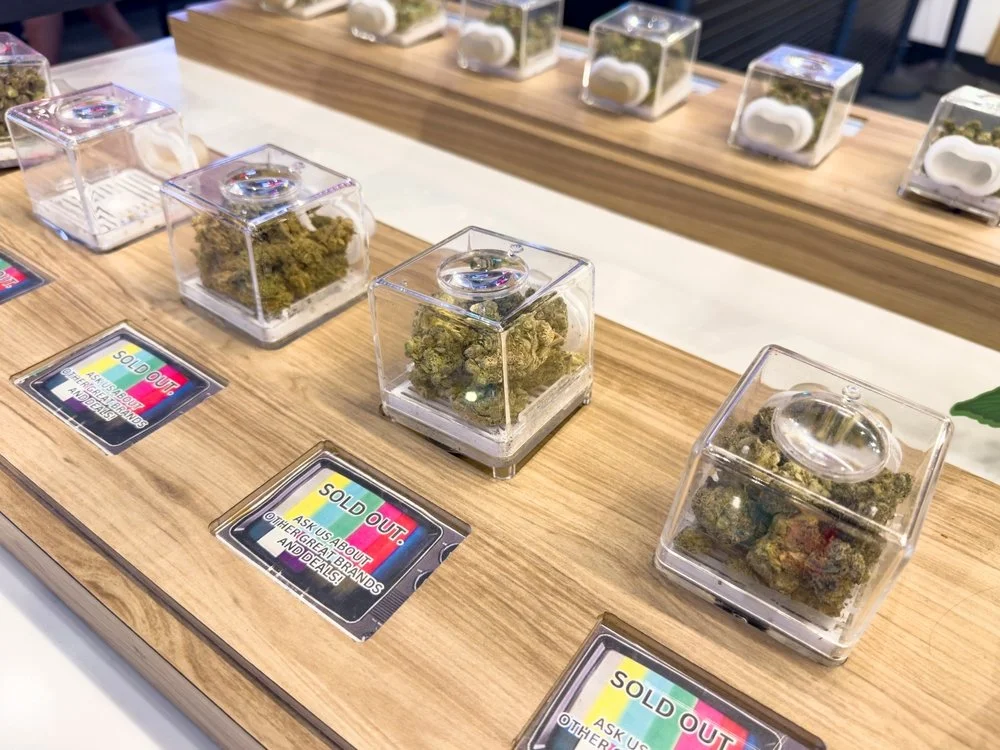
When researchers at CU Boulder purchased 178 flower samples anonymously from 52 dispensaries across Colorado and tested them independently, nearly 57 percent came back with THC significantly below the label. When University of Northern Colorado researchers tested 23 retail samples, the average observed THC was about 15 percent, roughly a quarter below the minimum labeled value. When analysts studied more than 215,000 results from Washington State's tracking system, they found potency varying systematically by which lab did the testing, even after controlling for product type, producer, and strain.
Natural variability does not produce a pattern that tracks lab identity instead of product chemistry. That pattern has a different explanation, and it starts with who is paying whom.
Potency inflation draws the most attention because it is easy to measure and easy to understand. A consumer pays for 28 percent THC and gets 18 percent. That is a genuine rip-off. It is also, in the larger framework of what is failing, the less dangerous problem.
The more dangerous failure is contamination reaching the shelf because a lab did not catch it or chose not to report it. Aspergillus in New York. Yeast and mold in Massachusetts where the odds of detection had been suppressed by a factor of ninety. A vape cartridge in California carrying a banned pesticide at concentrations that should alarm anyone with a passing familiarity with toxicology. Just this week, Missouri's Attorney General announced that hemp products sold by unlicensed retailers contained lead, arsenic, mercury, and ethanol. None of those belong in my weed.
Cannabis is a hyperaccumulator. It draws heavy metals from soil at rates far exceeding most crops. The pesticides and contaminants it absorbs do not sit inert. They interact with other medications in ways most patients and clinicians will never trace back to the cannabis product. A transplant patient whose drug levels shift unexpectedly. A child on anti-seizure medication whose control deteriorates over weeks. An oncology patient whose side effects worsen for no apparent reason. Those connections are real, they are documented in the clinical literature, and they are invisible to the people harmed by them. That invisibility is precisely why the testing system exists. And when the system is compromised, the patients absorb the consequence and never know the cause.
“For patients with limited means, those pressures push them toward cheaper, unregulated alternatives that carry precisely the contamination risks the legal market was supposed to eliminate.”
And the cost of that consequence is not distributed equally. Ninety-one percent of medical cannabis patients report no insurance coverage for their products. Average annual costs exceed two thousand dollars. Testing adds 10 to 15 percent to wholesale prices. Excise taxes push the markup further in many states. For patients with limited means, those pressures push them toward cheaper, unregulated alternatives that carry precisely the contamination risks the legal market was supposed to eliminate. Stricter testing standards are necessary. Without affordability protections, they become a sorting mechanism for who gets safe products and who does not. Equity here is not a separate conversation from safety. It is the same conversation. Keeping vulnerable patients inside the regulated system is what makes every other reform worth building.
Massachusetts, the state I know best from my years as a regulator, illustrates one more lesson worth drawing out.
MCR Labs has made itself the loudest voice on testing fraud in the Commonwealth. But being the loudest voice in a room does not make you the most credible one, and prominence in a debate does not confer objectivity. The structural concern MCR has raised, that the operator-selects-lab model creates a competitive race to the bottom, is supported by independent peer-reviewed evidence. That diagnosis stands on its own merits and does not require MCR's framing to be credible. Its January 2025 lawsuit against eight competitors is a separate matter, and the specific claims against individual defendants remain unresolved.
The testing ecosystem is not a story with heroes. It is a story about incentives, and everyone in the system responds to them. MCR entered the Massachusetts market as one of two active labs. When more than a dozen competitors arrived, its market share declined. Its lawsuit is a tort action seeking damages for lost business, framed as unfair competition.
It is also worth noting that the loudest complaints about contamination testing in Massachusetts have focused almost exclusively on total yeast and mold and potency inflation. Pesticide testing, which carries its own complexities around detection thresholds and accreditation standards, has received considerably less public scrutiny from the same voices.
The structural diagnosis in this piece does not require a protagonist. The system is the problem. The fix has to be architectural. Assigning moral clarity to any single institutional actor in a market this compromised substitutes narrative satisfaction for the harder work of redesigning the incentives.
The reform conversation has rightly focused on state reference laboratories. Oregon's reference lab can pull products from retail shelves, investigate complaints, and audit lab records against the tracking system. California's reference infrastructure directly caught contamination that private labs missed. Colorado has operated one since 2017. Michigan just passed legislation to activate one already built.
The concern I want to raise is about what happens if the reference lab movement succeeds on its own terms but fails to coordinate.
Michigan builds its reference lab with its own validated methods, its own proficiency protocols, its own threshold definitions. Maryland does the same. Oklahoma does the same. Minnesota, Vermont, Missouri, Delaware, each stands up its own facility and develops its own internal standards. A certificate of analysis from a Michigan lab now has a state reference lab behind it. So does one from Maryland. But the two reference labs are not using the same methods, not applying the same thresholds, and not participating in the same proficiency programs. A patient moving between states, or a clinician evaluating a product, has no way to know whether the certificate from one jurisdiction means the same thing as the certificate from another. What has been built is not a standard. It is a collection of ambitions that happen to share a name.
“The plant cannot travel across state lines under federal law. But reference standards can. Proficiency test samples can. Validated analytical methods can. Accreditation protocols can.”
The plant cannot travel across state lines under federal law. But reference standards can. Proficiency test samples can. Validated analytical methods can. Accreditation protocols can. None of those things are controlled substances. In my Clinical Therapeutics commentary, I proposed that medical cannabis states adopt shared testing standards and sampling protocols through reciprocal agreements or a consortium modeled on Uniform Law Commission structures. That work does not require Congress. It does not require rescheduling. It requires states to decide that harmonization matters more than independence, and to build accordingly. Colorado has nine years of reference lab experience. Those methods, those institutional lessons, should be informing every state that builds after it. Instead, each new state starts from scratch and calls the result oversight.
Canada, Germany, and Israel have each built coordinated frameworks with independent sampling and validated methods; the European Medicines Agency has drafted pharmacopoeial standards for cannabis flos. What connects those systems is straightforward: independent sampling, validated methods, and standards designed for a product that patients use therapeutically. When that foundation is in place, a certificate of analysis carries the same meaning in every clinic.
I keep returning to the political dimension because it is what will force action if the policy arguments alone do not.
The repeal campaigns gathering strength in Massachusetts and elsewhere have built their case on competence, not culture. They have moved past the argument that cannabis is dangerous and into the argument that the legal market cannot govern itself. Every enforcement action in this piece, every contamination failure, every certificate of analysis that said one thing while the product told a different story, becomes material for that case. I wrote about the repeal playbook in February. The opposition's most effective weapon is the competence attack. The testing record is building their argument for them.
The critics are not wrong about the failures. Where they are wrong is in assuming the failures are reasons to abandon the system rather than repair it. The illicit market has no testing at all. The hemp market in many states has minimal or no mandatory testing for the products millions of consumers are actually buying. A regulated system that can find its own weaknesses and correct them remains categorically different from the alternatives. But that distinction only holds if the corrections happen.
The opposition does not need to manufacture a crisis. The testing record is assembling one, carefully and empirically, one enforcement action at a time. The industry and its regulators still have the chance to fix this. That window is not going to stay open on its own.
Links and Resources:
Enforcement Actions
Cannabis Control Commission (Massachusetts). Summary Suspension Order, Assured Testing Laboratories, LLC. Boston, MA, June 30, 2025.
Cannabis Regulatory Agency (Michigan). Settlement and License Revocation, Viridis Laboratories and Viridis North. Lansing, MI, August 2025.
Department of Cannabis Control (California). License Cancellation, California Cannabis Testing Labs. Sacramento, CA, July 2024.
Department of Cannabis Control (California). License Revocation, Verity Analytics. Sacramento, CA, September 2024.
Office of Cannabis Management (New York). Precautionary Product Recall, Keystone State Testing New York. Albany, NY, February 2026.
Oklahoma Medical Marijuana Authority. Notice to Patients Regarding Products Tested by Greenleaf Labs. Oklahoma City, OK, August 2025.
Oregon Liquor and Cannabis Commission. Violation Notices, Seven Testing Laboratories. Portland, OR, September 2024.
Peer-Reviewed Research
Giordano, Gregory, Colin P. Brook, Marco Ortiz Torres, Grace MacDonald, Carillon J. Skrzynski, Jonathon K. Lisano, Duncan I. Mackie, and L. Cinnamon Bidwell. "Accuracy of Labeled THC Potency across Flower and Concentrate Cannabis Products." Scientific Reports 15, no. 20822 (2025).
Jikomes, Nick, and Michael Zoorob. "The Cannabinoid Content of Legal Cannabis in Washington State Varies Systematically across Testing Facilities and Popular Consumer Products." Scientific Reports 8, no. 4519 (2018).
Procter, Thomas, and Michael Baird. "Peer-review Blinded Assay Test (P-BAT): A Framework for Trustless Laboratory Quality Assurance for State-Regulated Cannabis Markets." Journal of Cannabis Research 7, no. 4 (2025).
Schwabe, Anna L., Vanessa Johnson, James Harrelson, and Mitchell E. McGlaughlin. "Uncomfortably High: Testing Reveals Inflated THC Potency on Retail Cannabis Labels." PLOS One 18, no. 4 (2023): e0282396.
Commentary and Analysis
Native Sun Cannabis. "MA Cannabis Testing Results: 2025 Dashboard." Massachusetts Cannabis Data. Accessed March 28, 2026. https://www.masscannabisdata.com/. Data source: Massachusetts Cannabis Control Commission, Open Data Catalog.
Collins, Shawn P. "Safeguarding Cannabis for Medical Use: Clinical Risks, Regulatory Gaps, and the Path Toward Equitable Standards." Clinical Therapeutics (2026).
Collins, Shawn. "Beyond the Hype: Unmasking Lab Shopping in Cannabis." THC Group, February 3, 2025.
Collins, Shawn. "The Repeal Playbook: How Cannabis Legalization Is Being Challenged on Competence, Not Culture." THC Group, February 21, 2025.
Schauer, Gillian L., Julie K. Johnson, David J. Rak, Thomas J. Sheehy, and Shawn P. Collins. "A Research Agenda to Inform Cannabis Regulation: How Science Can Shape Policy." Clinical Therapeutics 45, no. 6 (2023): 539-546.
Litigation
MCR Labs LLC v. Analytics Labs LLC et al. Suffolk County Superior Court, Massachusetts. Filed January 30, 2025.